Inside OpenAI Dots: Architecture of Persistent Autonomous Cloud Agents
A deep architectural breakdown of OpenAI Dots—always-on autonomous agents powered by GPT-6 Astra with dedicated cloud containers, browser control, and enterprise plugins.
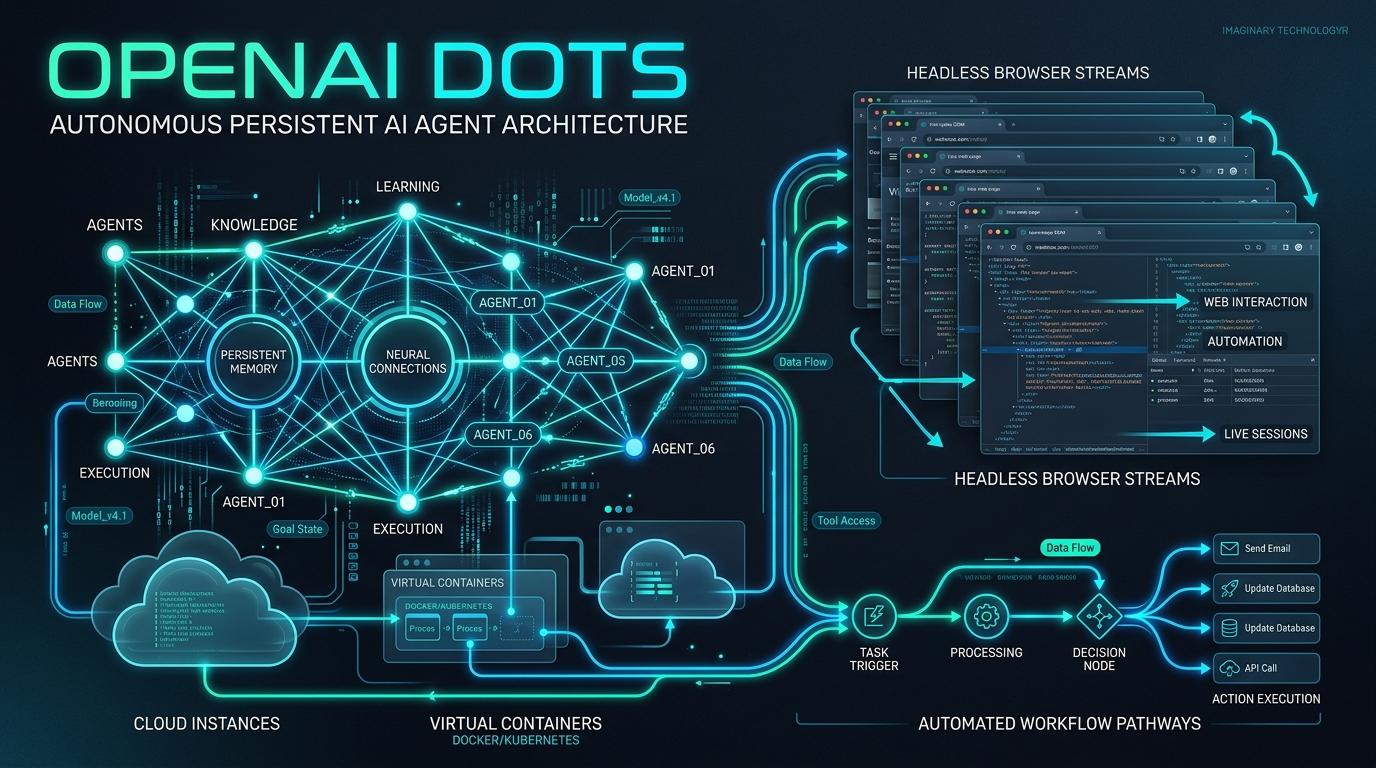
The paradigm of conversational artificial intelligence is undergoing a fundamental shift—from ephemeral request-response chatbots to stateful, long-horizon autonomous cloud agents. With the release of OpenAI Dots, powered by the flagship GPT-6 Astra foundation model, intelligent systems no longer terminate execution when a browser tab closes.
Instead, each Dot is instantiated with a dedicated, isolated cloud compute runtime, an autonomous headless browser instance, persistent long-term memory, and bidirectional access to over 4,000 enterprise applications.
In this technical breakdown, we examine the system architecture behind OpenAI Dots: virtualized cloud sandboxes, state persistence and memory compaction, agentic tool execution pipelines, and the dual-engine Auto-Review safety topology.
1. The Architectural Shift: Ephemeral Sessions vs. Persistent State#
Traditional Large Language Model interfaces follow an ephemeral interaction model. State is maintained solely through the prompt's context window; once a session completes or the client disconnects, execution ceases.
OpenAI Dots introduce a persistent execution model backed by an asynchronous state engine.
Continuous State Transitions#
The execution lifecycle of a persistent Dot is defined as a continuous state machine operating across four distinct operational phases:
Where:
- represents the current execution state, including active background jobs and cached intermediate artifacts.
- denotes incoming external events (such as scheduled cron triggers, GitHub webhooks, or Slack mentions).
- represents the hierarchically compacted memory retrieved from the long-term semantic store.
- is the evaluated safety policy output from the Auto-Review engine.
2. Dedicated Cloud Sandboxes and Computer Use#
Every Dot is allocated an ephemeral, hardened container environment in the cloud. This environment decouples execution from the user's local hardware and network, allowing operations to continue indefinitely in the background.
Sandbox Specifications#
| Component | Architecture Specification | Purpose |
|---|---|---|
| Compute Sandbox | gVisor-isolated MicroVM / Linux Container | Safe Python, Node.js, and Bash execution |
| Headless Browser | Chromium with CDP (Chrome DevTools Protocol) | Web navigation, dynamic DOM scraping, form interaction |
| Storage Layer | Encrypted NVMe Block Volume | Scratchpads, downloaded PDFs, CSV datasets, and build artifacts |
| Network Egress | Transparent Proxy with Allowlist Filtering | Secure API interactions and automated rate limiting |
3. Dynamic Tool Calling & The 4,000+ Plugin Ecosystem#
To interact seamlessly with enterprise infrastructure, Dots leverage a unified Model Context Protocol (MCP) and OpenAI's expansive plugin directory, allowing dynamic runtime tool synthesis.
{
  "dot_id": "dot_corp_analyst_09b",
  "model": "gpt-6-astra",
  "active_capabilities": [
    "cloud_browser_automation",
    "python_interpreter_v3",
    "github_repository_sync",
    "slack_event_listener"
  ],
  "runtime_mode": "autonomous_supervised",
  "memory_retention_days": 365
}
Safety and Access Control Matrix#
To prevent unauthorized actions or prompt injection attacks in persistent agents, access control is partitioned into two distinct execution tiers:
-
Read-Only / Autonomous Mode:
- Web browsing, document parsing, API querying, vector database searches.
- Executes autonomously on background schedules without requiring interactive approval.
-
State-Altering / Supervised Mode:
- Sending external emails, committing code to production repositories, initiating database writes, or executing financial transactions.
- Automatically pauses execution and dispatches an interactive confirmation prompt to the user via Slack, Teams, or the ChatGPT interface.
4. Dual-Engine Safety: Auto-Review and Proactive Supervision#
Persistent autonomy requires robust guardrails. OpenAI Dots implement a Dual-Engine Safety Model:
By decoupling the executing model (GPT-6 Astra) from the evaluating model (Critic LLM & Rule Engine), the system defends against indirect prompt injections hidden within untrusted web pages and external documents.
5. Enterprise Integration: Agent 365 & Centralized Governance#
For corporate deployment, OpenAI has collaborated with Microsoft to integrate Dots into Agent 365. This unlocks:
- Centralized Telemetry: Real-time observability over active agent tokens, tool latency, and compute consumption.
- Enterprise Single Sign-On (SSO): Enforcing strict SAML/OAuth boundaries so a Dot cannot access data beyond the assigned user's permission scope.
- Data Boundary Compliance: Ensuring internal proprietary documents analyzed by background Dots never leak into shared model training sets.
Conclusion: The Era of Always-On Intelligence#
The launch of OpenAI Dots represents a milestone in the evolution of software systems. By combining GPT-6 Astra's frontier reasoning, dedicated cloud execution sandboxes, and rigorous out-of-band safety policies, persistent agents move artificial intelligence from a passive conversational tool into an active, collaborative digital workforce.
As software engineering and knowledge work continue to scale, managing networks of specialized autonomous Dots will become as fundamental to modern cloud engineering as orchestrating microservices or managing CI/CD pipelines.
Frequently Asked Questions
What are OpenAI Dots and how do they differ from standard ChatGPT?+
OpenAI Dots are persistent, always-on AI agents operating inside dedicated cloud virtual machines. Unlike ephemeral chat sessions that reset when a user disconnects, Dots maintain state, memory, and scheduled execution graphs to continuously perform multi-step work.
Which foundational model powers OpenAI Dots?+
OpenAI Dots are driven by GPT-6 Astra, OpenAI's flagship frontier model optimized for multimodal reasoning, long-horizon computer use, autonomous browsing, and tool composition across thousands of enterprise APIs.
How does the Auto-Review safety system supervise autonomous agent actions?+
The Auto-Review engine operates as an out-of-band verification layer that intercepts planned write actions, tool executions, and external API calls, comparing them against organizational policies and user constraints before granting execution permissions.
How do OpenAI Dots integrate into enterprise workflows like Microsoft 365?+
Dots connect directly to platforms like ChatGPT, Slack, and Microsoft Teams, integrating with Microsoft Agent 365 for centralized enterprise governance, role-based access control (RBAC), and audit logging.
Further Architectural Reading
View full archive →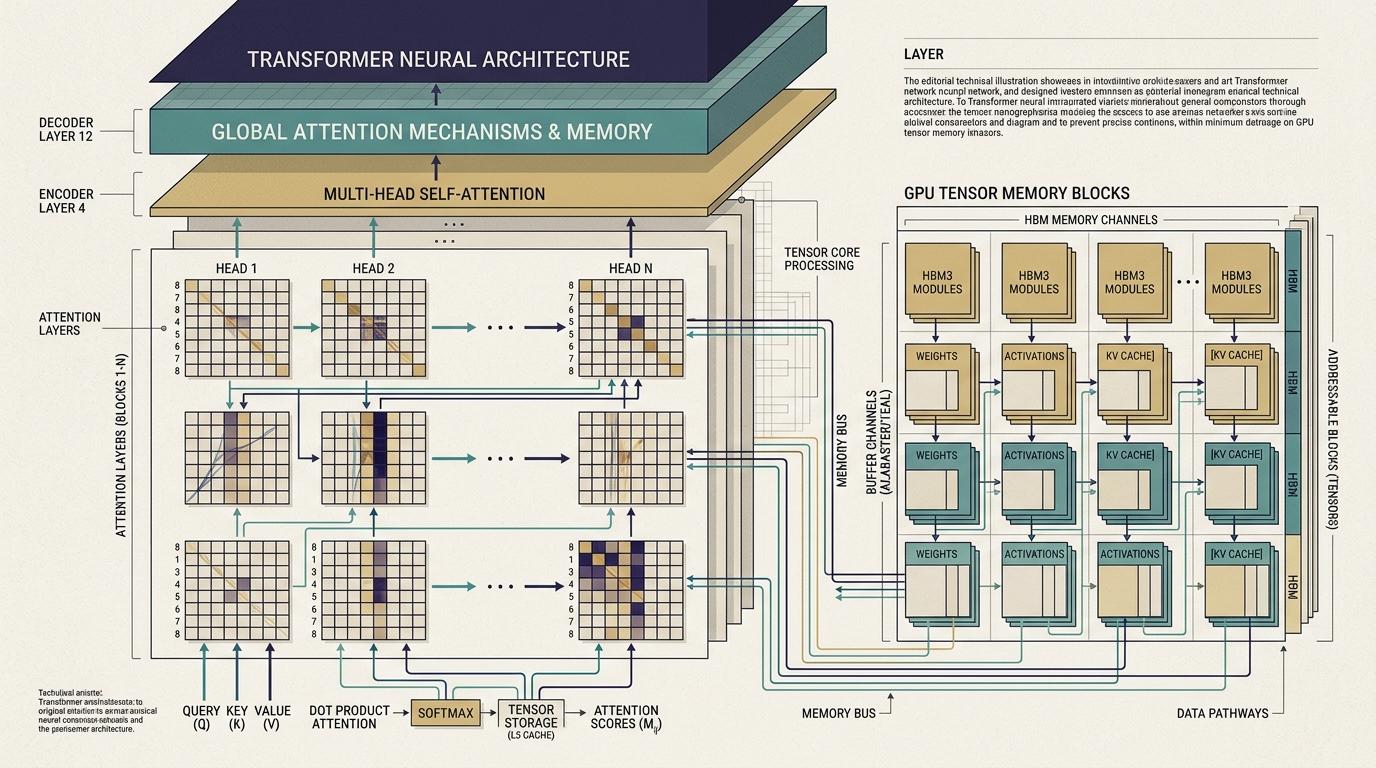
Sub-Millisecond Token Scheduling: Inside Disaggregated KV-Cache Paging for Frontier LLMs
A deep engineering breakdown of virtualized HBM3e memory paging, prefix tree sharing, and decoupled prefill-decode clusters for high-throughput AI inference.
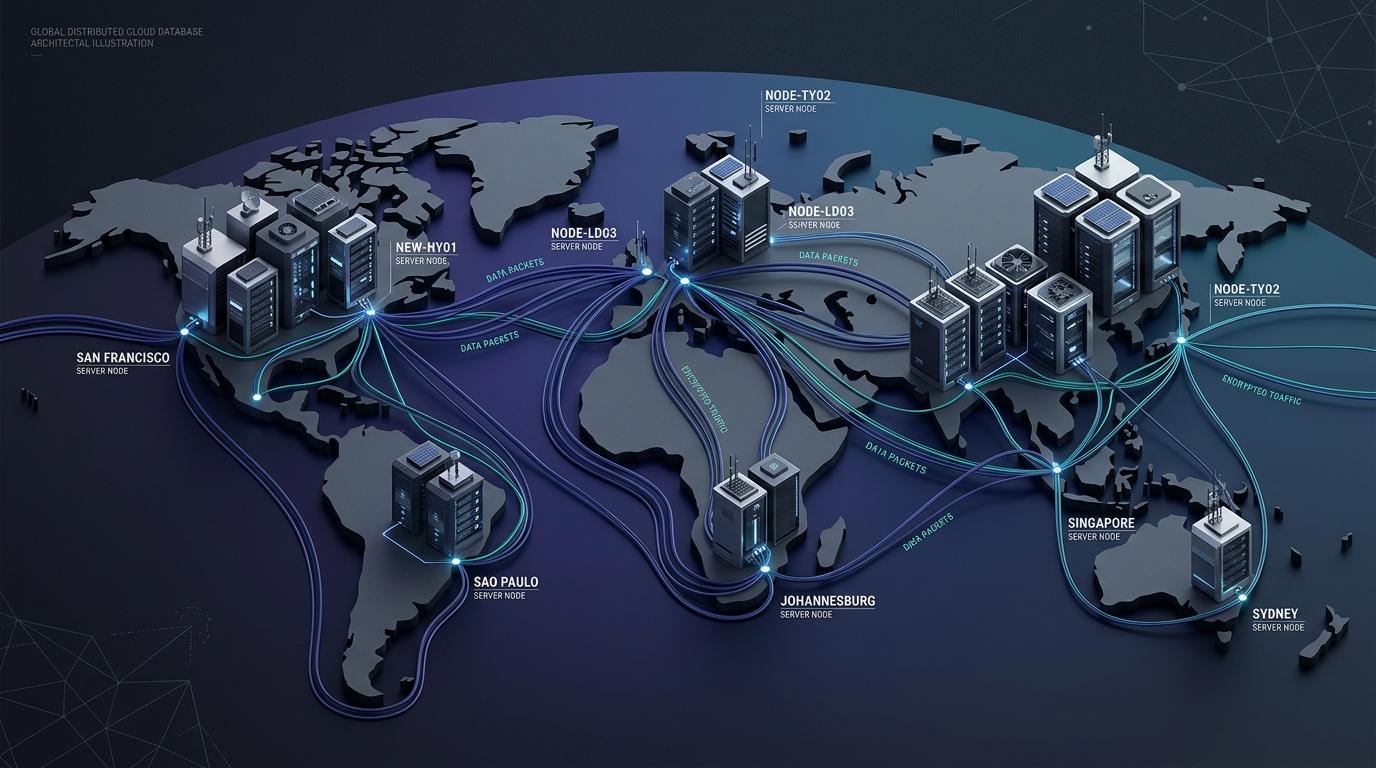
Deterministic Consensus at Global Scale: Engineering Multi-Region Quorum Topologies
How modern cloud databases decouple leader election from replication quorums across US, UK, EU, and APAC regions to cut p99 write commit latency by 54%.